
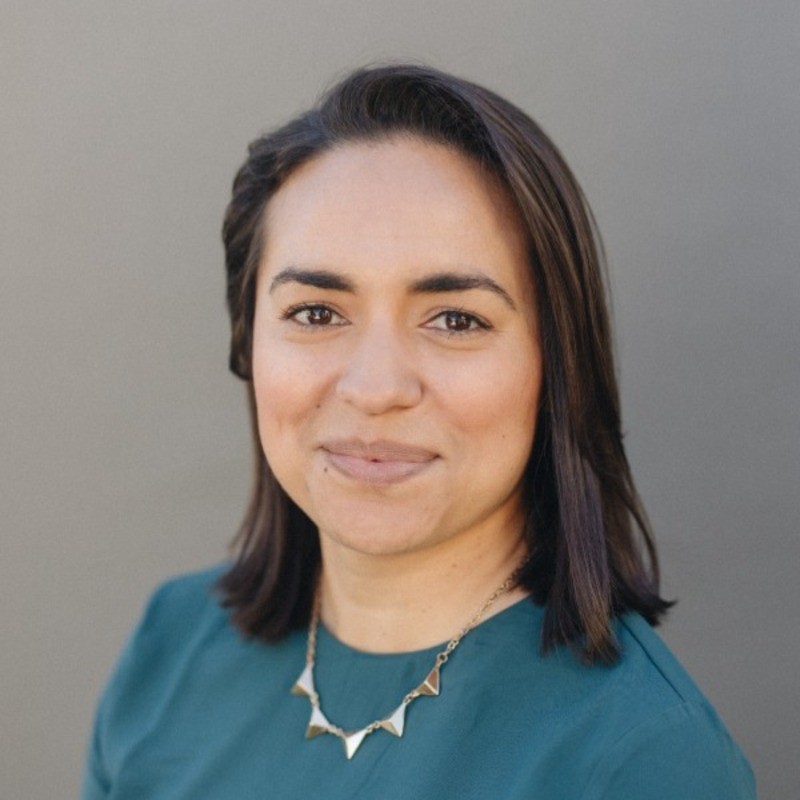
By Bethany Raya
“Power properly understood is nothing but the ability to achieve purpose. It is the strength required to bring about social, political, and economic change…”
—Martin Luther King, Jr.
In Western culture, the word “power” often makes us uncomfortable. After all, we have seen time and time again how politics, religion, and individuals have wielded power to cause harm. However, Dr. King reminds us that those who hold power can drive change. As a social institution with political and economic influence, power is inherent in the Church and its leaders. Unfortunately, Church leaders have often used the gospel to conceal their own biases and agendas, maintaining power, control, structure, and the status quo.
This is evident in examples such as the Doctrine of Discovery, which permitted the Church to take land from Indigenous peoples and rob them of their identities, including language, culture, and religion. Another example is the Church’s improper use of Biblical passages to support and profit from slavery. Thus, the gospel has been used for oppression instead of liberation.
Yet, in the gospel, we repeatedly see Jesus challenging power. He confronts religious authorities, secular and political power, and ultimately, He challenges us. Jesus’s life was intertwined with those living on the fringes of society—those labeled as unworthy, unfit, and unclean. However, Jesus transcended these labels and connected with them. Similar descriptors are often applied to LGBTQ+ individuals today—the very people I believe Jesus would embrace and associate with.
The Trevor Project’s 2022 national survey of LGBTQ youth ages 13-24 found that:
- 45% seriously considered attempting suicide in the past year.
- 14% attempted suicide, and this rate is higher for youth of color.
- 73% reported symptoms of anxiety.
- 58% reported symptoms of depression.
They also found that those who felt high social support from family reported attempting suicide at less than half the rate of those who felt low or moderate social support. Additionally, LGBTQ youth who lived in a community that is accepting of such populations reported a significantly lower rate of attempting suicide than those who did not.
The Church has a moral responsibility to address the needs of the marginalized and to do so in a manner that is trauma-informed.
I can only speak for myself, but I would venture to say that we LGBTQ+ folks are not asking for any special privileges; all we’re asking is to be fully included in the beautiful and often messy community called the Church. We want to chase God as much as He is chasing us, and we want to do so in community.
Again, speaking for myself (a Christian of Spanish and Native American ancestry who is lesbian), I have chosen to stay in the Church because God is communal. I believe the Gospel is too potent to allow harmful doctrine or the fringes of society to be its spokesperson.
As individuals who belong to a system, we can hide behind the guise of policy, doctrine, or rules. However, if we constantly hide behind such excuses, no progress is ever made; for some of you, this may be seen as good news, but it isn’t. When individuals or groups are held back, we are all held back. A rethinking of the frameworks that cause harm is required, and dissent should be welcomed, for if we do not change, we die. As Jonathan Martin states, “Whenever ideology is elevated over actual humans who bear the image of God, ideology is idolatry.”
Lastly, I want to remind and challenge us to think of Jesus in the human form He took. He was a brown man living in an occupied territory. For many of us, Jesus is the “other.” So how do we treat the “other” within the context of the church? Would Jesus be welcomed in the Church today, or would the powers that be kick Him out?
The capitalized “C” in “Church” is used to represent the Church as a broad institution rather than referring to a specific denomination.
2 responses to “Bethany Raya’s Testimony for Oord’s Queer Church Trial”
Thanks, Bethany!
Excellent!