
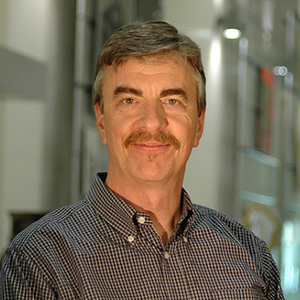
On July 25, 2024, Thomas Jay Oord was tried by the Church of the Nazarene for his views on LGBTQ+ matters. As part of his defense, he asked several people to testify on his behalf. Some could do so in person, others joined by Zoom. For a portion of Oord’s own defense, see his book My Defense at this link.
Here is Craig Keen’s testimony at Oord’s trial…
- I’ve been a member of the Church of the Nazarene for nearly 60 years, active in its churches for nearly a decade before that, an ordained deacon in the Church for 30 years, professor of theology at three of its universities for 24 years and assigned by it to a kindred university for 14 more. I can say with confidence from a lifetime of interaction with Nazarenes that, in general, we are not theologically adept. This is not, oddly, in every respect a bad thing. Instead of words (theo-logoi) we have inclined to “the heart” (lev/kardia). That is why so many of our members, from “bottom” to “top,” have not been charged with heresy, when in fact they have among other things refused the doctrine of the Trinity, out and out denied the humanity of Christ, refused to baptize infants, and repeatedly contradicted the doctrines of justification and sanctification (entire and otherwise). A blind eye has been turned to this otherwise overtly heretical “teaching,” not because these heretics were not really heretics, in a formal sense, but because those who loved them considered what they taught to pale by comparison with “their hearts,” hearts these lovers knew.
- Nazarenes have come honestly by this preference for “heart” over word. John Wesley famously preached the sermon “Catholic Spirit,” leaning hard on 2 Kings 10:15: “Is thine heart right, as my heart is with thy heart?,” the passage asks and then answers: “If it be, give me thine hand!” In this sermon Wesley relativizes speech, declaring that above and beyond it is the holy love for God and neighbors that language so often obscures. In the closing of this sermon, Wesley quotes lyrics of the hymn, “Catholic Love,” by his brother Charles. Its first line declares: “Weary of all this wordy strife, / These notions, forms, and modes, and names, / To Thee, the way, the Truth, the Life, / Whose love my simple heart inflames, / Divinely taught, at last I fly, / With Thee and Thine to live and die” (emphasis added).
- At a time when theological powerhouses all over Europe had voluntarily imprisoned themselves within rigid walls of propositions mortared by airtight Aristotelian logic, Wesley’s unlikely prioritizing of “heart” emerged in large part because he loved the texts of the early church.
- Late in the 4th century, as the Empire increasingly domesticated “Christianity,” one of Wesley’s favorites, Basil of Caesarea, wrote a treatise on the Holy Spirit. In it he argued a then controversial point, that the Holy Spirit is fully divine. In part because of his work, the church came to affirm that the Spirit is to be “worshipped and glorified together with the Father and the Son.” As important as that phrasing was to Basil, he was adamant that texts declaring the Spirit’s deity are not as true as is a life that worships and glorifies the Spirit. There is, he says, a difference between kerygma and dogma, between public proclamation and doctrine. The most significant difference between those terms, Basil says, is that kerygma is hoisted high in public, for all to see, while doctrine remains “unwritten” and “silent.” Doctrine is to Basil a tradition “handed down to [new Christians] in mystery . . . to be kept in silence” (Georges Florovsky, emphasis added). Doctrine—Basil’s “dogma”—is sacramental, liturgical, ecclesial, and pneumatological. Doctrines will not yield to be held fast. They are elusive mysteries, never captured in the abstract, say, in statements in Scripture or creed that even the Devil can quote. No matter how honored by time, decree, or the testimonies of saints and martyrs, sentences on a page—with their subjects, verbs, and predicates—written or repeated by rote, are not the truth as unwritten, unspoken doctrines are.
- That Basil could say all this in the late 4th century—in spite of Roman successes in harnessing the church for its own violent delights and violent ends—is due to the fact that from the beginning the church prioritized life.
- Cyprian in the year 256 wrote, “we are philosophers not in words but in deeds; . . . we do not speak great things but we live them” (emphasis added). Of course, Cyprian and the cloud of concurring witnesses before him understood that both their overt declarations and their lived teaching were to embody faith, hope, and love. However, there is also a consensus in the early church that the way by which all these are demonstrated is as . . . patience. They will know that we are Christians . . . by our patience, they believed.
- This approach is nothing new. It is found already in Scripture.
- The locus classicus for the authority of Scripture is 2 Timothy 3:16–17: “All scripture is inspired by God and is useful for teaching, for reproof, for correction, and for training in righteousness, so that everyone who belongs to God may be proficient, equipped for every good work” (NRSV). John Wesley read this passage differently than do Fundamentalists: To say “all scripture is inspired by God” signifies that it is a means of grace. “Inspiration” is not here about what happened long ago as stylus was put to page, and certainly not about right word choices. (See Wesley’s Explanatory Notes on the New Testament.) The inspiration of the Bible occurs in the reading and hearing and above all in the consequent works of patient faith, hope, and love, that the Bible, by the Spirit, inspires. (See also Romans 15:4.)
- James 1:19–25 declares (substituting here “impatience” for “anger”): “You must understand this, my beloved: let everyone be quick to listen, slow to speak, slow to [impatience]; for your [impatience] does not produce God’s righteousness. Therefore . . . welcome with meekness the implanted word that has the power to save your souls. But be doers of the word, and not merely hearers who deceive themselves. For if any are hearers of the word and not doers, they are like those who look at themselves in a mirror . . . . But those who look into the perfect law . . . of liberty, and persevere, being not hearers who forget but doers who act—they will be blessed in their doing” (emphasis added).
- Having said all this, I appeal to you, Tom’s judges, to act righteously, as you reach what the world calls a “verdict.” Look into Tom’s heart—patiently—with the “mind of Christ.” See if you find in him “any wicked way” (Psalm 139:24). There is doctrine, not in a set of propositions anchored in the shifting sands of a subculture. If you let your hearts resonate with his, if you ask, “Is your heart right, as my heart is with your heart?,” you will hear the Holy Spirit silently answer for him, “It is!” And “if it is,” then surely you have to reach out your hand, as one adult child of the Church of the Nazarene to another, and say, “Give me your hand!”
- You may still be tempted to follow the ink on a page, even though the historic testimony of the church tells us . . . that “the letter kills.” Paul chided the Corinthians for acting as if the dictates of Roman law could be used to judge the members of Christ’s body. “When any of you has a grievance against another, do you dare to take it to court before the unrighteous, instead of taking it before the saints?” Of course, it may seem that your work is precisely what Paul calls for. You are saints. You one day “will judge the world” (1 Corinthians 6:1–2).
- I would suggest, however, that the manner of judging determines where “grievances” are “taken.” That doesn’t mean that you become unrighteous, if you follow the lead of American law. However, rooted as it is in Roman law, it is by no means the “law of liberty.” To assume it is, is to have exchanged the patience of a council of saints for the efficiency of the system that crucified our Lord. I appeal to you to let your decisions be “heart” decisions, not, as Charles Wesley might say, “wordy” decisions, enthralled by abstractions.
- Finally, I’d like to draw attention to what it means to be a theologian, using myself as an exhibit.
- I have strained with all of my might for 56 years faithfully to understand, articulate, and teach Wesleyan-Holiness doctrine. I have never insisted on anyone’s conformity to my take on it. I know better than anyone else how fallible my verbiage is. Consequently, though I have sought to lead students to understand what I have understood, I have always concurrently prayed that I would thereby be a means of grace—to and for those who would hear or read my discourse, believing in my bones that lived doctrine cannot be squeezed until it bleeds black ink on white paper, that black ink on white paper is at best a gesture to lived doctrine.
- Until I retired I taught before an ugly brass crucifix. I attached it to the top frame of the whiteboard behind me. From the first day I did so, I prayed that in all my teaching I would become clear as glass, that only the crucified body of Jesus would be seen and heard in my stumbling speech.
- I have long disagreed, sometimes very strongly, with the word choices in our Manual, but not because I am out of harmony with our doctrine. I pray that I will always be in harmony with it. However—precisely as I am in harmony with our doctrine—among my most sacred obligations is to criticize, sometimes very strongly, the word choices in our official statements. I would prefer that to occur in venues set aside for theological interchange. However (!), when the Church impatiently refuses to abide by theological conferencing, I have no other option but to raise my voice wherever, whenever, and in whatever manner I can.
- I have never been good at conforming to in-crowd—especially Nazarene—etiquette. I chronically commit faux pas. Perhaps Tom does, too. But for the sake of the gospel, do not remove anyone’s credentials, because they are bad at an American subculture’s etiquette.
- What Tom and I do is “teach.” But we do not teach insisting on conformity, say, to my wording or Tom’s wording. Our teaching is a questioning, provoking, luring, and loving those who listen to us, beckoning them into the ways of the Holy God, the Deity who was pleased to dwell in the mutilated body of Jesus. That is how I—and Tom!—teach theology. Everything he says or I say is without authority, without coercion, without demand. We speak . . . and we wait. We wait for the challenges of others, for their questions, for their curious probing, and especially for the joy of finding them immersed in the doctrine that no one can reduce to propositions—but above all, we wait for the coming of the Reign of the Father of our Lord Jesus Christ, upheld by a strong Holy Wind that hasn’t yet let us fall. That is what God has called us to do. Woe to those who would silence God’s call!