
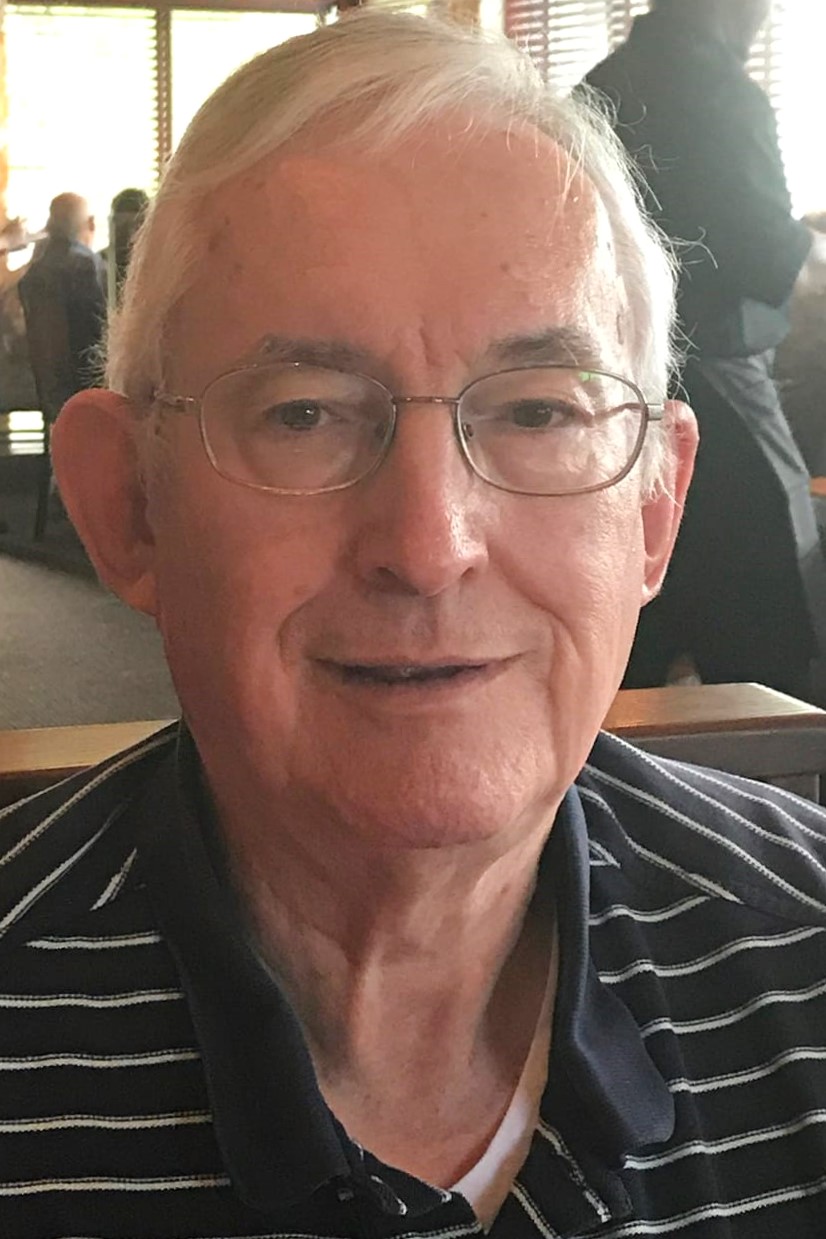
By Garnett Teakell
My Experience as a Seminarian
In order to provide background for this aspect of my experience, I need to begin by stating that I realized I was different from other boys in the first grade of elementary school, so I have said, based on that, that I’ve always realized I was a homosexual. That does not mean that from that age I knew what a homosexual was nor what one was called. Mainly, it means that I can never remember a time when I wasn’t a homosexual, against those who say that it is something we choose at some point in time. It was not until my senior year in college, as a result of a term paper I wrote, that I realized that the psychological term for what I had always been was “homosexual.”
Of course, at that time, I did not realize most of the implications of what I had discovered. I did realize almost immediately that that meant I was counter to the vast majority of society, and when I knew what the term meant, I realized that, according to the church I had been a member of since my childhood, God did not love me, although, being a religion major, I could not figure out why I definitely felt that He had called me to be a missionary.
After completing Bachelors and Masters degrees in theology from Pasadena College, I enrolled at our seminary. From the beginning, I had continual doubts about whether God really loved me or not. Meanwhile, I had been praying at least daily that God would heal me. By early in my Middler year, I had reached a crisis point of wanting to harm myself, because it already seemed obvious that God was not going to change me. When my desire to harm myself reached the point of deciding how I would go about it, I went to one of my professors, whom I had previously taken classes from in Pasadena College, and he was the first person I ever came out to. Because I was at the time taking a course from him, he felt that it would be unprofessional for him to counsel me. But he did the leg work for my beginning to see a Christian counselor, which continued for about a year. The thing I am most grateful for from that counselor was that he convinced me that God did love me and that I was a person of worth, even to the point of his encouraging me to continue my theological studies.
The first semester of my Senior year, I took a course on Wesleyan theology from the president of the seminary. It was probably the richest theological course I had ever had. However, I decided not to enroll in the second semester because I felt that the other students in the class were not taking it seriously enough. Early after the second semester began, the president made an appointment with me in his office (I did not even know where his office was until then, and I was within a few weeks of graduating). The purpose of the appointment was that he expressed his disappointment in my not enrolling for the second semester of his course. I told him how much I had appreciated the first semester, which I can say began my life-long love for Wesleyan-Arminian theology, but I also told him that I did not feel that my classmates were taking the course seriously enough. I cannot remember that we talked about that anymore, but he did ask if he could pray for me and asked what my greatest concerns were. I mentioned first that I was concerned that, with only a few more weeks before graduation, I had had no feelers about getting a church (undoubtedly partly because I was single). Then I mentioned the matter I had been praying for most urgently during my whole time at the seminary. He was obviously surprised at what I had just told him. His reaction was that he could not believe it, that I did not act or walk or talk like a homosexual. He also said that, according to his understanding, a person could not know that he was homosexual unless he had tried to have sexual relationships and knew that he did not like it, which I later learned was a rather common belief at that time (over fifty years ago). Nevertheless, he did pray with me about the two matters I had mentioned.
The reason I believe that this was a failure of the Church with regard to my homosexuality is that neither the professor nor the seminary president told me that I ought to reconsider my call to be a missionary. Of course, that would have been awkward, since I was only weeks from graduation in the case of the president. But I have often thought that if either of them had expressed that concern, they could have saved me (and my future wife) a ton of grief, especially at the end of our 25 years on the mission field.
(I have to admit that I had to think long and hard about whether I wanted to open up about this chapter of my experience with the Church. I know that it makes me sound extremely naïve, if not stupid; how could anybody not have more sense than to confess such a thing to the seminary president? There are at least a couple of reasons why I did not know any better, all of them related to the fact that this happened more than fifty years ago. 1. Although even I did not realize it until about 20 years ago, I am Aspergian, and one of the main characteristics of Autistics is that we do not have a well defined sense of social propriety. 2. During the six years that I had been a ministerial student, they had constantly inculcated into our minds the inviolability of the seal of confidentiality. I was so naïve at the time that I did not realize that confidentiality was not taken all that seriously by most pastors, district superintendents, general superintendents, regional directors or other missional leaders, college presidents, or even college professors. Fifty years of experience have taught me to be very cynical, particularly about this matter. 3. Praying almost daily for 40 years that God would heal me of this horrible “thorn in the flesh” convinced me that it was not going to happen. Eventually, I came to believe that if it was not that important to God, why should I worry about what the Church thought about it?)
My Being Outed as a Missionary
My wife (now ex) and I had been missionaries for 25 years in three countries in Central America. I taught, mainly theology and Greek exegesis, in two seminaries during the last 22 years. In March of 2000, the Regional Director, who is now the newest General Superintendent, made an appointment to discuss a course on Pauline theology that I was supposed to teach at the Masters-level at the seminary in Costa Rica (we were in Guatemala at the time).
When I got to the regional office for my appointment on Friday, I was left in a conference room (which should have been a clue). He came in with a book on Pauline theology, which he asked if I had read yet (I had). We discussed the book briefly. Suddenly, he called two of my missionary colleagues in, and that’s when I realized I had been “tricked” into the meeting, because they weren’t even professors and could have cared less about Pauline Theology. The RD began by handing me a sheet of paper and saying, “We understand you’ve been living an alternate lifestyle and are here to require you to turn in your credentials. (I had to sign the paper saying that I was voluntarily surrendering my credentials.) Unlike in the States, where they probably would have asked me to mail them my credentials, they went with me to my condo and had me get my credentials out of the strong box and surrender them to them then and there. Previously, he had required me to surrender my car keys, so the rest of the day I had no way to get around; I don’t know if he was afraid that I would try to wreck the car or sell it.
He and one of the regional office employees then took me to the seminary, where my wife was teaching a course. They called her from the class and told her what had just transpired. While we were waiting for her to come out of her class, the RD asked me how I could ever have thought that an omniscient God would call me to be a missionary; I did not try to answer his question, but I did wonder what he thought God’s criterion for calling him was. After my wife joined us, the RD told us they had already purchased the tickets to take us out of the country. (The problem was, the tickets they had purchased were for Albuquerque, which was my district, and we told them there was no way my parents could meet us there, so they had the tickets changed to a place near where my wife’s parents lived in Bradenton, FL.)
As I mentioned, by then we had no access to our car, so our best missionary friends were nice enough to run us all over town that afternoon doing errands, and the wife helped my wife start the process of packing our belongs for the department to send them to us.
The meeting when the RD outed me was at 9:00 Friday morning. At 10:00 Saturday morning we were at the international airport, and shortly afterward, we were out of the country. On our way to the airport, the RD told us that the official reason for our leaving was that we had irreconcilable marital problems, and that that was the reason we were to give to family and others in the States for why we had been dismissed. Nevertheless, a meeting of the missionaries had previously been planned for Sunday evening, and that meeting had barely finished when we started getting phone calls from several of the missionaries, letting us know that there was healing for my problem, so we knew that the RD had not told them the agreed upon reason for why we left.
My Being Defrocked
A couple of days after my outing by the Division of World Mission, I received a telephone call from the GS in jurisdiction in which he emphasized all the things implied in my “discipline,” such things as not getting in front of a congregation for any reason (and he specified a long list) during my “discipline.” I guess he was trying to sound hopeful when, at the end, he said that after eight years, I could apply to become a pastor again, but that I could never hope to become an elder, missionary, or professor in a Nazarene institution again. Since we had been friends for over 20 years, he knew that I felt called specifically to theological education and that I would have no reason to ever start the process again of becoming a licensed minister so that I could become a pastor. I objected to “eight years,” saying that I personally knew heterosexual adulterers who had had their orders restored after two years, and he said that the Church had found over many years’ experience that homosexual offenders had a greater chance of recidivism than heterosexual.
He also emphasized that even if I had my district license restored, there was no guarantee I could get a church, that small churches could not afford the liability insurance that having a homosexual pastor would require. He did not specify why that might be so, but I took it as his way of saying that the Church believes that all homosexuals are pedophiles. I guess trying to justify my efforts to become “straight,” I told him that I had been celibate for the past two years, thanks to weekly counseling sessions, and he informed me that that would not make any difference as far as my being defrocked and decommissioned as a missionary — that I was being disciplined because of my past transgressions, irrespective of what might happen in the future. For this reason, I say that, experientially, the CotN does not really believe that it makes any difference if a LGBTQIA+ individual claims to be celibate or not, nor does it really believe that a homosexual can change.
The Church’s Unsuccessful Attempt to Begin the Disciplinary Process
Before the airplane flight had left Guatemala, I had already decided that my years as a Nazarene were over; in fact, at the time, I doubted seriously I would ever again be a part of any church. Since we stayed with my in-laws in Florida for two weeks, I had no choice but to attend the church of the Nazarene with them during that time. But as soon as we moved to south Texas, I let my wife know that I would no longer be attending the Church of the Nazarene. I did compromise my plan not to attend any church, and we began attending United Methodist congregations.
For reasons I do not remember, during my telephone conversation with the GS shortly after we returned to the States, I did not mention that I had no intention of ever being a Nazarene again. Therefore, it is not too surprising that he just assumed I would begin the disciplinary process. So, a few days later, I received a telephone call from the district superintendent of the district on which we had been members all the years we had been missionaries. Apparently, I had been assigned to him by the GS. The DS began the conversation by telling me that he thought that the best way I could handle telling people that I was no longer a missionary/elder was to be completely honest with them about why I had been defrocked. Then he proceeded to tell him about a woman on his district who had just recently been released from prison because of fraud or embezzlement, and how she was being completely open in talking with others about why she had been in prison. I told him that what that lady had decided to do was irrelevant to me, that she did not have to worry about being strung up on a barbed-wire fence in freezing temperatures in Wyoming, as had recently happened to Matthew Shephard, resulting in his death. We briefly continued our conversation, but I let him know that I had already decided to cease being a Nazarene due to the way we had been treated in Guatemala. I also told him that nothing he had said in our conversation to that point left me the impression that he knew the first thing about homosexuality. As soon as he realized that I was no longer going to be a Nazarene, and thus would not be cooperating in the disciplinary process, our conversation ended, and that was the last contact I had with anyone in the Nazarene hierarchy.
6 responses to “WAYS THE CHURCH OF THE NAZARENE FAILED ME AS AN LGBTQIA+ INDIVIDUAL”
Thank you for sharing these details of your story. I am saddened but not surprised. I hope the example of telling what happened will motivate the thousands of Nazarenes to tell their stories of unethical cotn treatment for multiple unreasonable accusations. It needs to be done.
Future freedom to be yourself and relational blessings on you and your family,
Gloria Coffin
i am writing this with tears in my eyes…you see, garnett is my brother, and i will never forgive the people who did this to him. what he didn’t say in his article is that we were raised from day one in the nazarene church…we were there any time the doors were open…it was our way of life. growing up i knew garnett was different, but he was the most gentle, loving brother to me and still is. i can tell him anything without fear of being judged or condemned. i, too, have left the nazarene church…when he called me on the day he was treated so badly by the powers that be in the church, he was crying and stuttering so hard i couldn’t even understand him. of course my husband and i opened our home to him and his wife while they were trying to “sort things out”. you see, my husband is a retired texas football coach and he and garnett have not only been brothers- in- law since day one, but have the most interesting relationship a football coach and gay, intelligent ex pastor could have…they just enjoy talking about life in general…and there is no judgment on either side. i love my brother and the conversations we have every wednesday evening at 7:05…i guess it’s our prayer meeting of sorts. i pray for him every night, that god will love him for the wonderful person he is and that he will feel some peace in his soul after all the pain the nazarene church has subjected him, too.
Garnett I admire your strength and courage. Expressing openly your pain and suffering surely wasn’t easy. Specially because most of these afflictions were inflicted by those who themselves, cover their own shortcomings under a hypocritical interpretation of Christianity, purposely forgetting that the most important principle of this religion is LOVE. Your story vindicates many whom had walk away from structural religion in search for a more compassionate and loving spiritual environments. The many that have escaped from religious organizations full of corporate minded pseudo ministers who care more about securing financial stability, obtaining power and status and satisfy their egos. Your story unmasks some of the people in positions of power within structured religion. It shows unequivocally that they aren’t there to heal the wounded, to love the rejected ones nor to embrace tolerance toward anyone who doesn’t adjust to their worldview. I’m glad you outgrew church. I’m glad you are more than any other average missionary. I’m honored to had met you while I was a student at UNAZA. I’m glad to have had the privilege to receive theology classes with you. I’m so proud of the humility and sensibility you show as a human being. That’s your super power!
I appreciate your words of encouragement. I remember you well from your days at UNAZA. I hope everything is going well with you.
Same here. We do remember you very well. I decided to post my comment on your wall since I know many won’t see it here. I hope you don’t mind. Hugs my professor
You have been very brave to tell your story – you have my admiration for telling the truth about how you were treated/ I have seen the heartbreak and sadness of LGBQT persons in New Mexico and Michigan where I live – the Dutch Reformed Church is divided into 2 camps – the one I belong to is a Liberal Church and that is my husband and my stance – I am thankful that people can now come out and be themselves but it is a hard road to walk on. Blessings and Peace to you☦️